
BEYOND THE WORLD WE KNOW
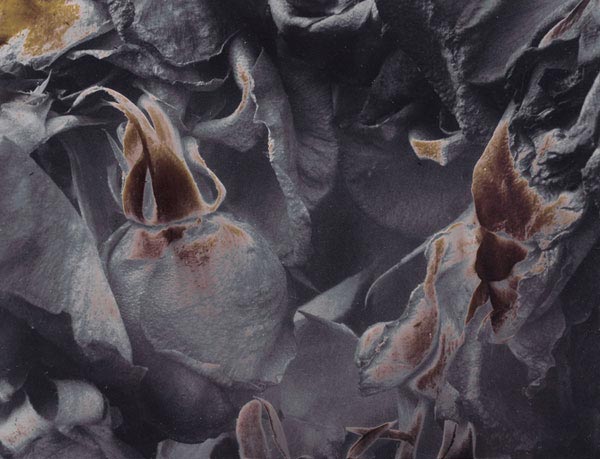
Photographer Minor White’s quote acknowledges a fundamental quandary faced by photographers in the 20th century. On the one hand, their medium was esteemed precisely for its ability to record what the eye saw. On the other hand, photographers, like painters and sculptors, sought new approaches and rationales to advance their picture making. Abstraction as a nonrepresentational, visual language played a significant role in bending the conventional expectations of a medium unquestionably suited to describe people, places and objects. Beyond the World We Know presents the work of 16 artists who embraced a new goal for their practice: to loosen the grip of realism and demonstrate photography’s ability to suggest something other than itself, to serve as a conduit for visual metaphor and personal expression.
Stanton Macdonald-Wright’s Haiga Portfolio, 1966-1967,
is an example of the artist’s most pronounced blending of
Eastern and Western influences. Seventy-five years old when he did them they meld innovations of Western modern art with Japan’s greatest poetry. The term haiga refers to a style of Japanese painting done by haiku poets. Haiku poems are known for their extreme brevity and simplicity. Each of the twenty prints that compose the Haiga Portfolio have a corresponding haiku written by one of Japan’s most important poets.
HAIKUS

UP CLOSE AND FAR AWAY

Life as we know it has been put on hold. Many of us feel far away from the comfort and security of our regular routines — we’re up close to a new normal. We are all united in this unexpected opportunity to examine the aspects of our lives that we are distanced from and closer to. Up Close and Far Away invites Utah K-12 students to reflect on their own experiences, activities, and commitments while looking closer at relationships, places, and things in their current spaces. As today’s challenging circumstances shape our worldviews, we can also look forward with hope to the future.